Storytelling has always been humanity’s favorite form of entertainment. Long before cameras, editing software, and on-demand services, stories were passed on through spoken word, live performance, and shared experiences. Over centuries, these forms have evolved—shaped by culture, technology, and audience expectations—into the multi-billion-dollar entertainment industry we know today.
This article takes you through that evolution, exploring how the way we tell stories has transformed from ancient amphitheaters to today’s streaming platforms, and what might come next.
The Ancient Stage: Drama as a Communal Event
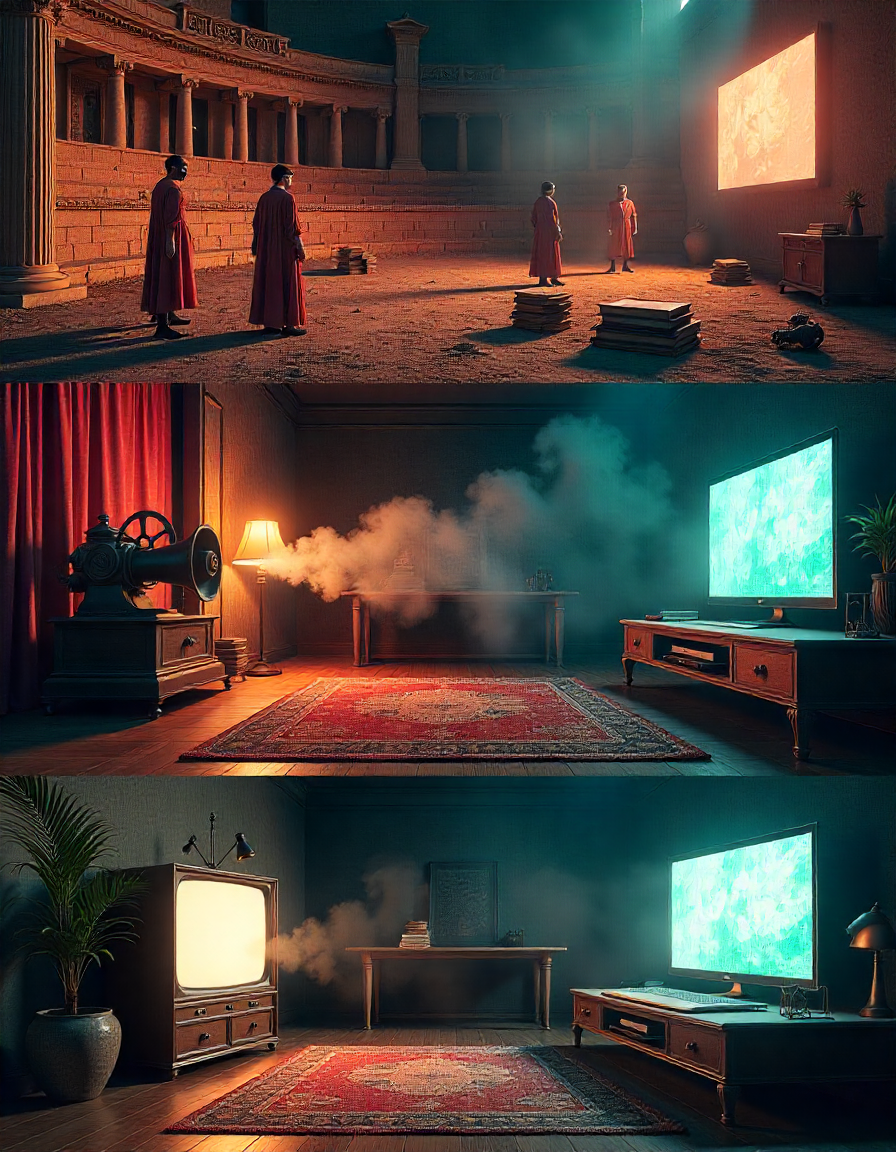
The earliest formal storytelling took place in communal gatherings. Ancient Greece, for example, gave birth to theater as both an art and a public ritual. The great tragedies of Sophocles or Euripides weren’t just entertainment—they were societal reflections, moral debates, and even political commentary.
Actors performed in open-air amphitheaters, their voices carrying over thousands of spectators. Masks and exaggerated gestures helped convey emotions in the absence of close-ups or special effects. The audience wasn’t passively consuming—they were reacting, debating, and sometimes even influencing the direction of a story.
The key takeaway from this era? Storytelling was deeply social. It belonged to the people, and its success depended on that shared emotional space.
The Rise of Print: Stories You Could Hold in Your Hands
With the invention of the printing press in the 15th century, storytelling underwent a seismic shift. For the first time, tales could travel without the storyteller. Books, pamphlets, and plays could be replicated and distributed across cities, countries, and continents.
Entertainment became more personal. Readers could immerse themselves in a world at their own pace, pausing and revisiting passages. Storytelling moved from the collective setting of the theater into private spaces—bedrooms, libraries, cafes.
This period also gave rise to serialized fiction in newspapers, where authors like Charles Dickens hooked readers with cliffhangers that had them rushing for the next issue. In many ways, it was the 19th-century equivalent of “binge-watching.”
Cinema: The Birth of a Global Medium
When the Lumière brothers projected moving images to a paying audience in 1895, they sparked the birth of modern cinema. For the first time, visual storytelling could be captured, preserved, and replayed indefinitely.
Silent films relied heavily on visual expression—body language, lighting, and framing became the tools of narrative. Then, in 1927, The Jazz Singer brought synchronized sound, changing cinema forever.
The early to mid-20th century became the golden age of film. Hollywood studios like MGM, Paramount, and Warner Bros. churned out iconic stories that would define popular culture. Stars emerged whose personas were as important as the characters they played, and cinemas became social hubs.
What cinema did differently was scale. A single film could be watched by millions across the globe, creating a shared cultural vocabulary. Everyone knew the same heroes, the same romances, the same climactic moments.
Television: The Story Comes Home
In the mid-20th century, another innovation changed the entertainment landscape—television. It didn’t require a ticket, a trip to the theater, or a fixed schedule (once recording technology came into play). Now, stories came directly into living rooms.
Television expanded the possibilities for long-form storytelling. Shows could develop characters and plots over multiple seasons, creating deeper emotional investment. Sitcoms like I Love Lucy brought humor into weekly routines, while dramas like Hill Street Blues redefined serialized storytelling.
More importantly, TV created a kind of ritual—families gathering at the same time each week to watch a favorite program. It was a continuation of the communal experience of theater, but on a more intimate, domestic scale.
The Digital Revolution: From DVDs to Downloads
The late 20th and early 21st centuries saw rapid changes in how stories were distributed and consumed. First came VHS tapes and DVDs, which allowed people to watch films and shows on their own schedule. Then came the internet, which unlocked entirely new possibilities.
Suddenly, stories weren’t bound to physical media. You could download an episode, watch it on a laptop, and discuss it online with people from across the globe. Fan communities flourished in forums and chat rooms, dissecting plot twists and speculating on endings.
This era also saw the birth of web series and independent productions that bypassed traditional studios entirely. Storytelling became more democratized—anyone with a camera and an internet connection could create and share.
Streaming: The On-Demand Era
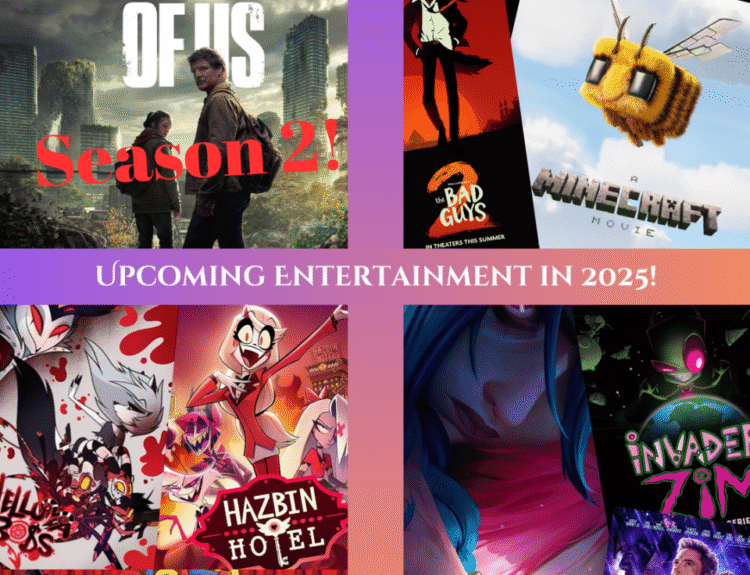
Streaming platforms like Netflix, Hulu, Disney+, and Amazon Prime Video have transformed storytelling yet again. The model has shifted from waiting for scheduled broadcasts to having entire seasons available instantly.
Binge-watching has altered the rhythm of storytelling. Writers can now structure narratives knowing that audiences may consume multiple episodes in one sitting. This allows for more intricate, layered plots, but it also changes pacing—less emphasis on weekly cliffhangers, more on long-term arcs.
Streaming has also globalized entertainment in unprecedented ways. A Korean drama can gain millions of viewers in Europe; a Spanish crime series can dominate American charts. Subtitles and dubbing have removed linguistic barriers, making storytelling truly universal.
The Impact of Technology on Storytelling Itself
Each technological leap hasn’t just changed how stories are delivered—it’s influenced the types of stories told.
-
Theater demanded exaggerated emotions and archetypal plots to engage large live audiences.
-
Print allowed for internal monologues, complex world-building, and slower pacing.
-
Cinema leveraged visual spectacle and emotional immediacy.
-
Television thrived on character-driven arcs and serialized tension.
-
Streaming encourages interconnected universes, long-term payoffs, and niche genres that wouldn’t have survived in older models.
What’s Next? Interactive and Immersive Storytelling
Looking ahead, emerging technologies promise another transformation. Virtual reality (VR) and augmented reality (AR) are already experimenting with placing audiences inside the story. Instead of watching characters explore a haunted house, you might explore it yourself.
Interactive storytelling—like Netflix’s Bandersnatch or video games with branching narratives—blurs the line between audience and creator. The story adapts to your choices, making each experience unique.
The risk, of course, is losing the shared cultural moments that have defined storytelling for centuries. If everyone experiences a different version of a story, what happens to the collective conversation? That’s a challenge the next generation of storytellers will need to navigate.
The Constant: Our Need for Stories
Despite all the changes in medium and technology, one thing hasn’t changed: our need to connect through narrative. Whether it’s a campfire tale, a stage performance, a movie premiere, or a midnight binge-watch, stories give shape to our experiences, teach us about ourselves, and help us understand others.
The mediums will keep evolving. The delivery methods will keep shifting. But the heartbeat of storytelling—the desire to see ourselves reflected, challenged, and inspired—will remain the same.