Introduction
Technology has moved from being a support tool to the driving force behind social and economic transformation. Every sector—from healthcare to agriculture—relies on digital solutions to streamline operations, improve accuracy, and expand access. Understanding where technology stands today and where it is heading tomorrow is crucial for organizations, governments, and individuals who want to remain competitive in a rapidly changing environment.
Artificial Intelligence as a Daily Utility
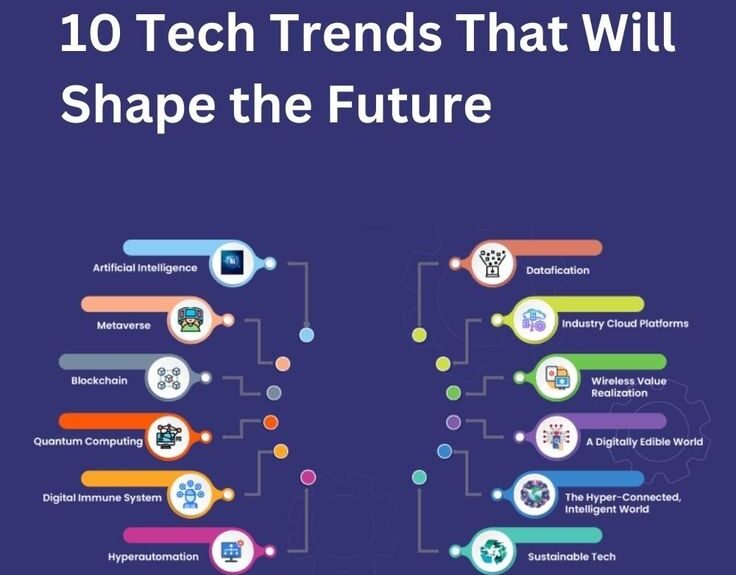
Once confined to research labs, artificial intelligence now powers everyday applications. Voice assistants interpret spoken commands, logistics firms use predictive algorithms to optimize delivery routes, and medical professionals deploy machine learning to detect diseases earlier than ever before. One of the most notable shifts is the integration of AI into productivity tools, making tasks such as drafting documents, analyzing data, and managing schedules faster and more efficient. However, this growth also raises questions about data privacy, algorithmic bias, and ethical governance, pushing regulators to establish clearer frameworks.
5G and the Foundation of Connectivity
The global rollout of 5G networks has moved from pilot projects to large-scale adoption. These networks deliver far higher speeds, lower latency, and increased capacity compared to their predecessors. This leap in connectivity enables real-time applications that were once impractical, such as autonomous vehicles, immersive virtual reality experiences, and remote robotic surgeries. Businesses benefit from greater bandwidth, while consumers enjoy seamless streaming and interactive entertainment. Despite the opportunities, infrastructure costs and security concerns remain barriers that governments and private firms continue to address.
Blockchain Beyond Cryptocurrency
While blockchain gained fame as the underlying technology for digital currencies, its potential extends far beyond finance. Supply chain management now uses blockchain for transparent tracking of goods from origin to destination. In healthcare, distributed ledgers allow secure sharing of patient data across institutions without compromising confidentiality. Smart contracts—self-executing agreements coded directly onto the blockchain—are being adopted in sectors like real estate, insurance, and legal services. As industries test new use cases, blockchain is gradually shifting from hype to practical adoption.
Sustainable Technology and Green Innovation
As climate change becomes an urgent priority, sustainable technology is at the forefront of innovation. Renewable energy systems, such as advanced solar panels and offshore wind farms, are being enhanced with digital monitoring tools to maximize output. Electric vehicles are no longer niche products but mainstream alternatives, supported by expanding charging infrastructure. Additionally, smart grids use real-time analytics to balance energy supply and demand more efficiently. Organizations are also adopting green IT practices, including data center cooling innovations and carbon-aware computing, to reduce environmental footprints.
Cybersecurity in a Hyperconnected Era
The same digital growth that brings opportunities also introduces vulnerabilities. Cyberattacks targeting critical infrastructure, financial institutions, and healthcare systems have increased in scale and complexity. Ransomware incidents, phishing campaigns, and state-sponsored threats require constant vigilance. In response, cybersecurity solutions have become more advanced, using machine learning to detect anomalies and blockchain for identity management. Governments worldwide are strengthening data protection regulations, compelling businesses to invest in resilient defenses and employee training to minimize risks.
Quantum Computing on the Horizon
Although still in its experimental stage, quantum computing holds potential to revolutionize problem-solving capabilities. Unlike classical computers, which process information in binary, quantum machines use qubits that can exist in multiple states simultaneously. This unique property enables them to solve certain complex problems exponentially faster. Industries such as pharmaceuticals, logistics, and finance are already exploring pilot projects. While mainstream deployment is years away, progress from companies like IBM, Google, and startups suggests a future where previously intractable challenges become solvable.
The Internet of Things and Smart Environments
The Internet of Things (IoT) is expanding rapidly, connecting billions of devices worldwide. Smart homes now feature thermostats that learn user preferences, appliances that self-monitor, and security systems that provide remote alerts. In cities, IoT supports traffic management, waste reduction, and energy efficiency. Industrial IoT (IIoT) helps factories track machinery performance and prevent downtime through predictive maintenance. However, widespread adoption also creates data management and security challenges, pushing for stronger standards and protocols.
Virtual and Augmented Reality for Work and Leisure
Virtual reality (VR) and augmented reality (AR) have grown beyond entertainment into practical applications. In education, immersive classrooms allow students to explore historical sites or dissect virtual anatomy. In the workplace, AR assists technicians by overlaying digital instructions onto physical equipment, while VR enables realistic training without real-world risks. Retailers use AR to let customers “try on” products virtually before purchasing. As hardware becomes more affordable and software more sophisticated, these technologies are poised to reshape learning, shopping, and collaboration.
Global Impact of Technology Shifts
The worldwide adoption of new technologies is not evenly distributed, creating both opportunities and challenges. Advanced economies often adopt innovations more rapidly, while developing regions face hurdles such as limited infrastructure and digital literacy gaps. However, initiatives focusing on affordable smartphones, cloud-based services, and satellite internet aim to close this divide. Bridging the digital gap ensures that technological progress translates into inclusive growth rather than deepening inequality.
Looking Ahead: Key Trends to Watch
Several emerging themes will define the next decade of technological progress:
-
Edge Computing: Processing data closer to its source will reduce latency and improve efficiency for connected devices.
-
Human-Machine Collaboration: Tools that augment, rather than replace, human skills will redefine productivity.
-
Ethical Tech Development: Greater attention will be placed on transparency, inclusivity, and accountability in design.
-
Decentralized Infrastructure: From finance to content distribution, decentralized models will challenge traditional intermediaries.
-
Personalized Experiences: Services will increasingly adapt to individual preferences, reshaping consumer expectations.
Conclusion
Technology is in constant transition, shaping industries, societies, and individual lives. From the practical applications of AI and blockchain to the promise of quantum computing and immersive realities, innovation continues to expand the boundaries of what is possible. At the same time, challenges in security, sustainability, and equitable access demand careful planning. The organizations and individuals that adapt quickly, embrace responsible practices, and invest in emerging tools will be best positioned to thrive in this rapidly evolving digital landscape.